Green Metropolitan Region of Arnhem–Nijmegen: Complexity, Care and Curiosity on the Path to Climate Resilience
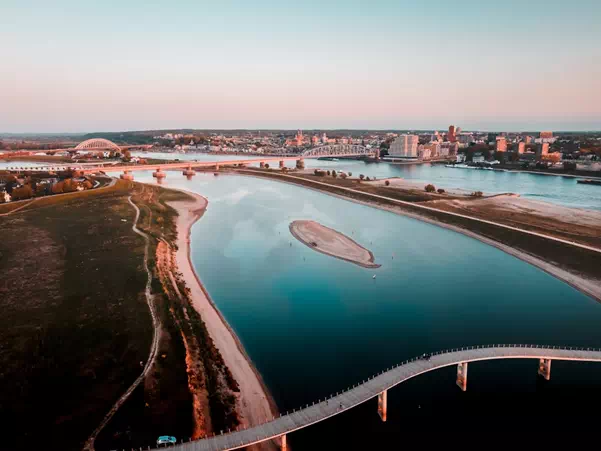
The Green Metropolitan Region Arnhem-Nijmegen (GMR) represents a unique region in Pathways2Resilience, as it brings together 17 municipalities into a partnership with a shared vision. As an urbanised region, the GMR region has several priorities to meet its goals, including green growth, productivity, recreation, connectivity, and circularity.
As a region encompassing four major rivers, the GMR faces water-related climate concerns around river and pluvial flooding, drought, water quality and availability, land use and ecosystem impacts. Tackling water- and climate adaptation amid a complex governance landscapeemerged as a goal for this region while undergoing its Regional Resilience Journey (RRJ).
Governance challenges arise due to the sheer number of regional actors and institutions with diverse policy cycles and administrative procedures and evolving data and information. These factors create the risk of blind spots and duplicated efforts.
To support implementation, the region saw the opportunity in establishing a more stable climate baseline.
Within the GMR, there are currently two channels through which the coordination and implementation of activities related to climate adaptation take place:
- The channel from the national Delta Plan for Spatial Adaptation (DPSA), where involved governments in a DPSA work region collaborate to implement the seven ambitions of the plan.
- The channel from the GMR itself, where vision-driven policy documents and objectives guide the activities.
Both are shaped and executed through co-creation among municipalities, provinces, water boards, the private sector and knowledge and research institutes. Each channel brings its own focus and funding source, and coordination happens through their own regular administrative and policy cycle. Besides that, there are also several regional networks that include climate adaptation in their broader agendas, involving many active parties in climate polices.
Arnhem-Nijmegen's P2R Journey
Since its journey in P2R, Arnhem Nijmegen has gained a better overview of its existing policies, visions and implementation plans for climate adaptation across governance levels within the GMR, which include the Urbanisation Strategy 2040, the future vision Green Metropolitan Region 2120, and the Groen Blauw Raamwerk.
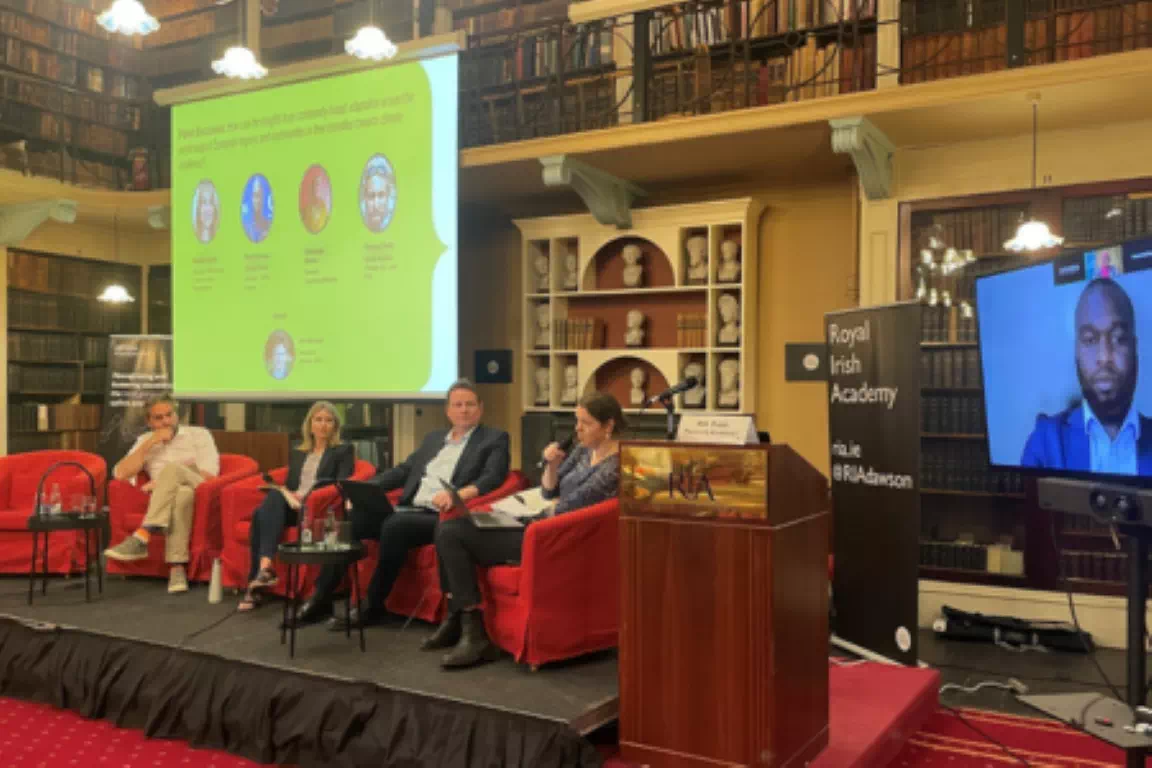
The Green Metropolitan Region understands that its climate challenge is too large and complex to be fully addressed within the timeframe of one and a half years under the Regional Resilience Journey framework. It makes sense with this context that Harriet Tiemens, Director of the Green Metropolitan Region Arnhem-Nijmegen, advised regions from the newest cohort of regions during her panel contribution at the P2R Summit on 11 February in Budapest to “Focus, focus, focus, otherwise it’s too complicated.”
In addition to the climate challenge, the Arnhem–Nijmegen WoonDeal (related to transformative housing and urbanisation) includes a major construction task of 60,000 new homes. Given the urgency of the housing deal, the region has chosen to focus its Resilient Journey on climate-resilient construction in co-creation with the stakeholders influencing the housing sector, including housing corporations, insurers, water authorities and knowledge institutions. Long term, understanding the influence each of these stakeholders carries will help the region garner support for adaptation work. The region has already made progress through its regional deal ‘Healthy, Green Growth’, which includes an adaptation focus.
For the GMR, the journey toward climate resilience can be captured in three words: complexity, care, and curiosity, reflecting both the challenges and the spirit of collaboration driving the region forward. Climate resilience is not a single project or a quick solution but rather a complex process that requires cooperation across many sectors and stakeholders.
As the region tackles the Regional Resilience Journey head on, it plans to involve more colleagues to get involved, better understand the methodology, and address gaps.
Moving Toward a Holistic Approach
One of the most exciting developments in the Dutch region of Arnhem–Nijmegen is a growing recognition that climate resilience is holistic. For too long, organizations and plans existed side by side without truly connecting. The region had ten different missions, each important, but often working in parallel rather than in partnership.
Now, there is a stronger effort to align these missions. Stakeholders are increasingly aware that their work is interconnected, and cooperation is no longer optional — it is essential.
“People in our region now understand that it’s a holistic system where everybody has to cooperate. We have different plans and organizations working on climate adaptation, but they didn’t always know what the others were doing. Now, we are bringing them together,” stated Franske van Duuren, a project manager from the GMR.
This shift in mindset away from fragmented plans is paving the way for new projects specifically dedicated to climate resilience building, greening the city and underground infrastructure. While Arnhem–Nijmegen has already advanced several major initiatives, the launch of projects explicitly focused on resilience marks a turning point.
Looking Ahead
The region is proud of this progress and eager to continue. With complexity as a reality, caring as a value, and curiosity as a driver of innovation, Arnhem–Nijmegen is showing that climate resilience is not just about adaptation measures — it is also about transforming the way communities work together.