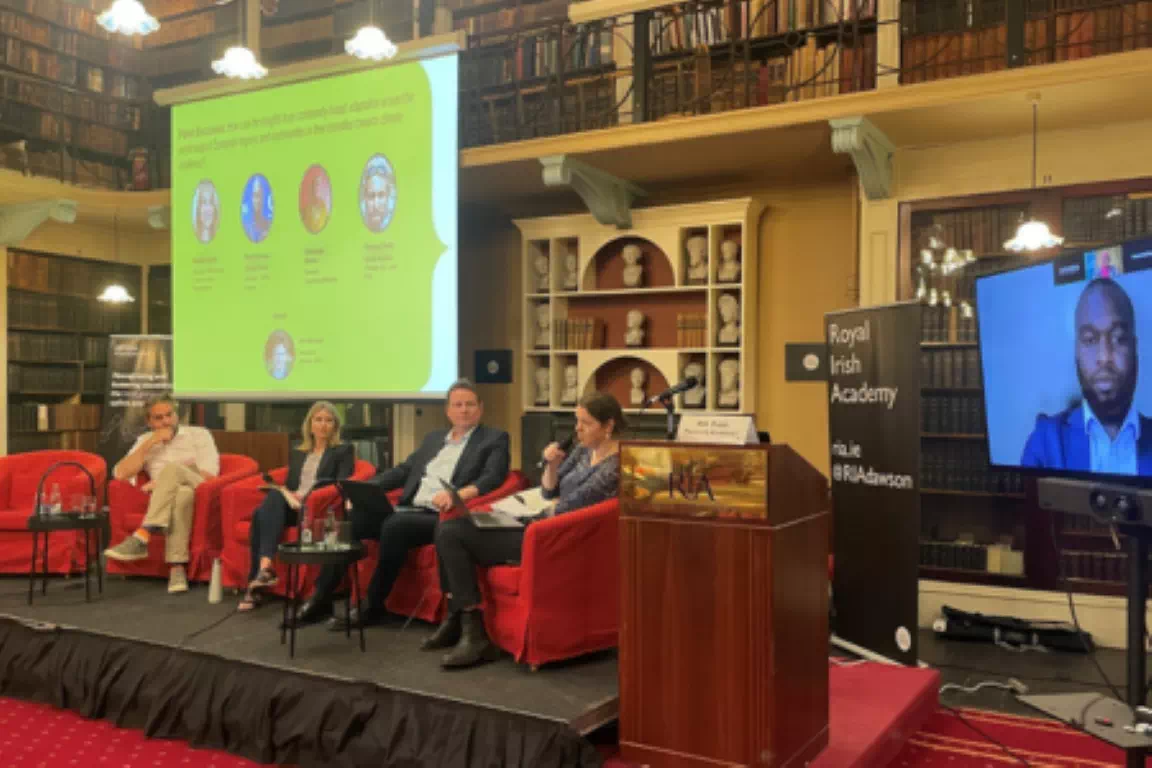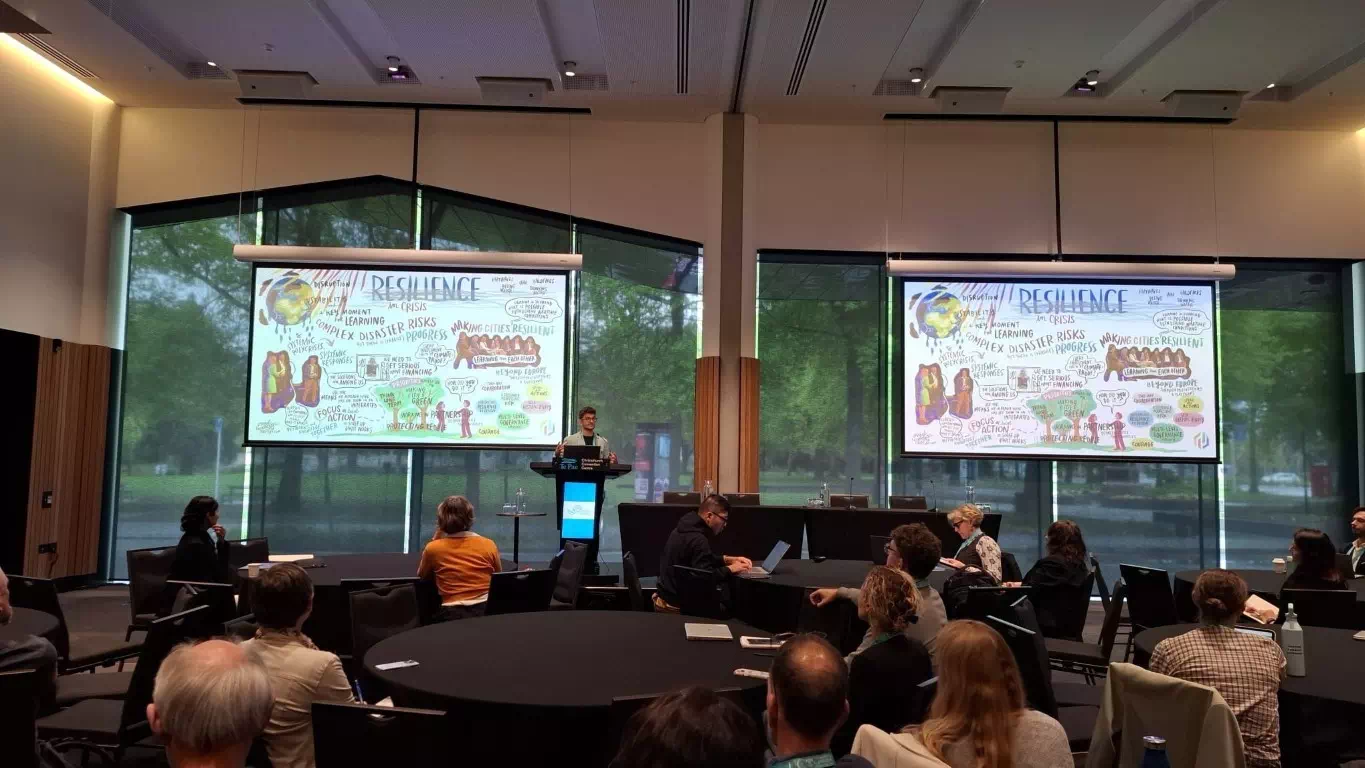
The global climate adaptation community converged in Ōtautahi Christchurch, New Zealand this year for the Adaptation Futures Conference 2025, where a clear message emerged: incremental change is no longer enough. The gathering brought together researchers, policymakers, and practitioners to chart a more ambitious course, one that fundamentally transforms how communities build resilience in the face of mounting climate impacts.
Beyond Business as Usual
At the heart of the conference was a push for "transformative adaptation", approaches that go deeper than tweaking existing systems to instead strengthen the social and ecological foundations of resilience itself. This shift represents a maturation of the adaptation field, moving from reactive adjustments to proactive reimagining of how societies can thrive amid climate disruption.
ICLEI Europe, a partner in Pathways2Resilience together with ICLEI Oceania, co-hosted sessions that tested European experiences against international contexts, while bringing member cities from multiple regions into the conversation. Their involvement highlighted the growing recognition that adaptation solutions must flow in all directions, not just from global institutions downward, but from local experiments outward.
Perhaps the most striking feature of this year's conference was the prominent integration of indigenous perspectives throughout the program. From keynote speakers to field excursions, Indigenous knowledge wasn't treated as a side consideration but as central to adaptation planning. The conference also featured an Indigenous/First Nations/Oceans Talanoa day, which catalysed the launch of an Indigenous Climate Adaptation Network, a potentially game-changing platform for elevating traditional ecological knowledge in global adaptation policy. Experiences from Aotearoa New Zealand demonstrated how disaster recovery can centre Māori perspectives, offering a template for more equitable adaptation worldwide. One example is Dr Shari Gallop's research on incorporating Māori kaitiakitanga (intergenerational stewardship) into adaptation pathways, which showcased how ancient wisdom can be woven into modern planning frameworks, creating approaches that honour cultural values while addressing contemporary challenges.
Pathways Thinking Gains Momentum
Adaptation pathways, flexible planning approaches that map multiple possible futures, dominated technical discussions throughout the week. New Zealand has become a hotbed for this methodology, with both researchers and government officials sharing real-world applications from local to national scales.
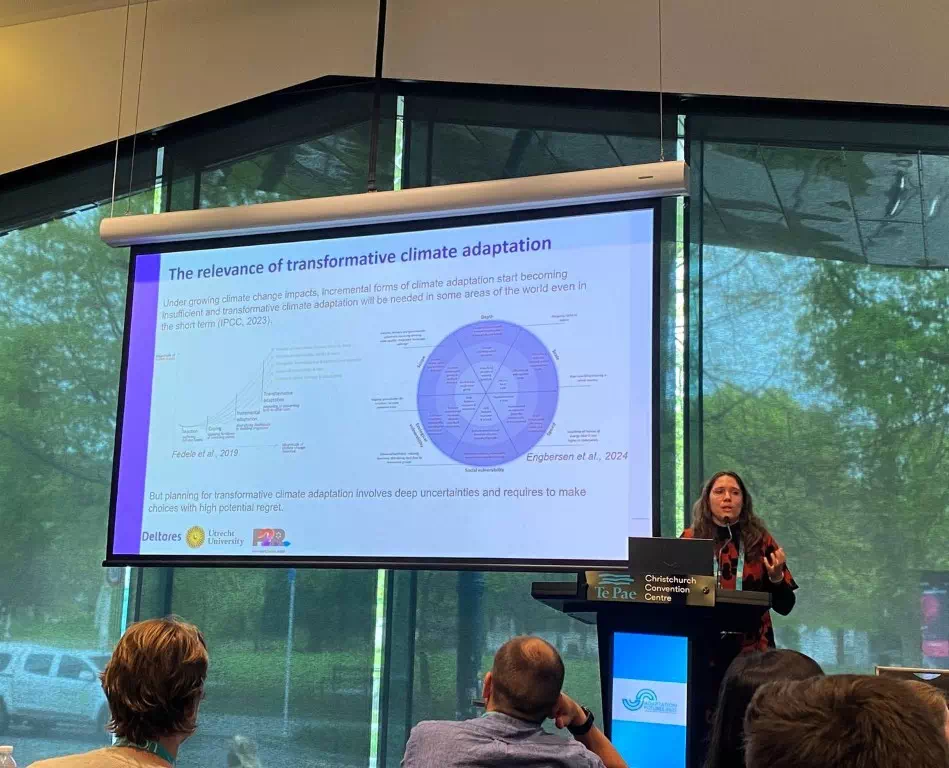
Pathways2Resilience partner, Valeria Di Fant from Deltares, was involved in the session “Adaptive pathways. Novel developments to accelerate adaptation action” which illustrated five significant innovations pushing the field forward:
- Handling complexity: Julius Schlumberger's DAPP-MR approach tackles the messy reality of multiple, interconnected risks across different sectors, a critical advance as climate impacts rarely arrives in isolation.
- Spatial thinking: Research from New Zealand and Australia demonstrated how decisions in one location ripple outward, affecting adaptation options elsewhere. This spatial dimension helps planners avoid creating new problems while solving old ones.
- Cultural integration: Beyond the indigenous knowledge applications already mentioned, researchers showed how traditional stewardship concepts can be embedded within technical planning frameworks.
- Seizing opportunities: Work funded by the Pathways2Resilience (P2R) initiative identified existing opportunities across Europe that can accelerate adaptation when woven into adaptive pathway plans. I removed the rest of the sentence here, I think easier to read like this All good.
- Staged approaches: A decade of global experience has refined how pathways are developed, with researchers advocating for iterative processes that increase in sophistication over time rather than attempting comprehensive analyses from day one. Suggest to remove this sentence altogether as it was not the focus of any of the talks specifically. Done
Prof. Marjolijn Haasnoot (Deltares & Utrecht University) and Dr. Judy Lawrence (Victoria University of Wellington) led efforts to synthesize lessons from pathways studies globally and within New Zealand, while a post-conference workshop on sea level rise allowed deeper dives into specific applications.
Participatory methods featured prominently as essential complements to technical analysis. Talking circles and relational mapping emerged as innovative tools for grounding adaptation strategies in local realities and lived experiences, ensuring that abstract planning exercises connect to the communities they're meant to serve.
These approaches reflect a broader recognition that adaptation isn't just a technical challenge but a fundamentally social one, requiring methods that build trust, surface diverse perspectives, and create shared ownership of solutions.
Investing in the Next Generation
The conference organizers demonstrated commitment to early-career participants, dedicating an entire day before the official program to networking, career guidance, and forward-looking discussions about adaptation's future. This cohort is now developing a perspective paper to capture their insights, suggesting that the event's impact will extend well beyond the conference halls.
Looking Ahead
The prominence of programs like Horizon Europe at the conference underscored the growing importance of cross-regional collaboration. As adaptation challenges become more complex and interconnected, partnerships that bring together diverse perspectives, from indigenous communities to European municipalities to Pacific island nations, will be essential for developing solutions that are both globally informed and locally relevant.
The Adaptation Futures Conference 2025 painted a picture of a field in evolution: more ambitious in its goals, more inclusive in its methods, and more sophisticated in its tools. Whether this gathering marks a genuine turning point will depend on how effectively these insights translate into action on the ground. But if the energy and innovation on display in Christchurch are any indication, the adaptation community is ready to meet the moment.